Lactate Threshold Calculator
Lactate Threshold (LT) is the exercise intensity at which lactate starts to accumulate in the blood faster than it can be removed. It's a critical marker for endurance performance and training zone determination. Show more
Threshold tracking without the testing
FormBeat detects threshold changes from the rides you're already doing and keeps your zones — heart rate and power — current.
30-day free trial · Cancel anytime


“If you find yourself wishing there was just one simple resource you could rely on to fully explain, examine and guide your training, FormBeat could be your answer.”
 Trusted by 20,000+ cyclists
Last updated:
Lactate Threshold vs Anaerobic Threshold
"Lactate threshold" and "anaerobic threshold" are often used to mean the same thing: the intensity at which lactate starts to build up in your blood faster than your body can clear it. More precisely, what most people call the anaerobic threshold is the second lactate turnpoint (LT2) — roughly 95% of FTP, or the hardest effort you can hold for about an hour. So an anaerobic threshold calculator and a lactate threshold calculator estimate the same number, and the tool above works for either.
What Is Lactate Threshold Heart Rate (LTHR)?
Your lactate threshold heart rate is the heart rate you sustain at threshold effort. A common field estimate is the average heart rate from the final 20 minutes of an all-out 30-minute time trial. LTHR anchors your heart rate training zones , so it is worth re-testing as your fitness changes.
Frequently Asked Questions
What is lactate threshold in cycling? +
How do I improve my lactate threshold? +
What is the difference between lactate threshold and FTP? +
How often should I test my lactate threshold? +
What is my lactate threshold heart rate? +
Related Tools
All Tools →Heart Rate Zones Calculator
Build 5- or 7-zone heart rate models from max HR or LTHR.
FTP Calculator
Estimate your FTP from a 20-minute, ramp, or 8-minute test and get your power zones.
Zone 2 Calculator
Find your Zone 2 range for aerobic base training.
Power Zones Calculator
Turn your FTP into training zones with exact watt ranges.
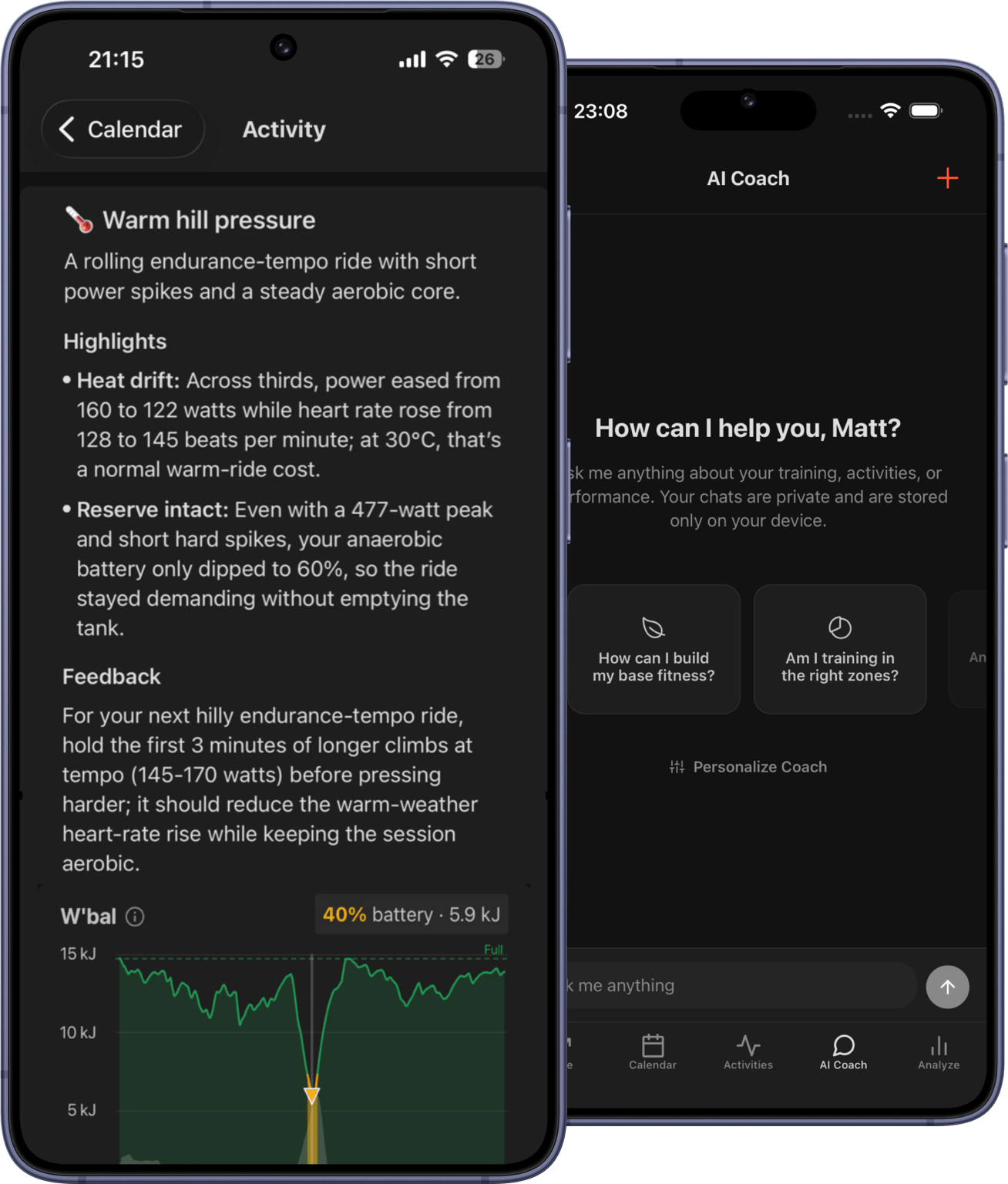
A coach who's seen every ride you've done
Ask FormBeat's AI Coach anything - what to ride today, why a session felt flat, how to pace your next race - and it answers from your real training: your power, your history, how you're recovering. Not generic tips, but a read of what each ride actually meant and what to do next.
The guidance you'd pay a coach for - for the price of an app.