VO2 Max Calculator
Estimate your VO2 max - the maximum amount of oxygen your body can use during exercise - in seconds. VO2 max, measured in millilitres of oxygen per kilogram of body weight per minute (ml/kg/min), is the gold-standard measure of cardiovascular fitness and aerobic endurance. Show more
Watch your fitness actually improve
FormBeat analyzes every ride to track your power records, aerobic efficiency, and fitness trends over months — not just one number.
30-day free trial · Cancel anytime


“If you find yourself wishing there was just one simple resource you could rely on to fully explain, examine and guide your training, FormBeat could be your answer.”
 Trusted by 20,000+ cyclists
Last updated:
What is VO2 Max?
VO2 max is the single best measure of cardiorespiratory fitness and maximal aerobic capacity. Whether you run, ride, row, or swim, understanding and improving your VO2 max is central to better endurance performance - and it is a powerful marker of long-term health.
VO2 max, or maximal oxygen consumption, is the maximum amount of oxygen your body can take in, transport, and use during intense exercise. Measured in millilitres of oxygen per kilogram of body weight per minute (ml/kg/min), it reflects the combined efficiency of your entire cardiorespiratory system - your lungs absorbing oxygen, your heart pumping oxygenated blood, and your muscles extracting and using that oxygen for energy production.

Because it captures maximum oxygen uptake across the whole system, VO2 max matters in every endurance sport - running, cycling, rowing, swimming, and triathlon - and as a general marker of cardiovascular health. As a rough guide, recreational exercisers typically fall between 30-45 ml/kg/min, well-trained endurance athletes 50-65, and elite endurance athletes 70+, though values vary with age, sex, and sport.
Is Aerobic Capacity the Same as VO2 Max?
Yes — "aerobic capacity" and "VO2 max" describe the same thing: the maximum rate at which your body can take in and use oxygen during hard exercise. The terms are used interchangeably in exercise physiology, so an aerobic capacity calculator and a VO2 max calculator (often shortened to "VO2max", or commonly misspelled "V02 max" with a zero) return the same ml/kg/min figure. This tool works as both.
You may also see it called maximal oxygen uptake or maximal aerobic capacity. Whatever the label, a higher number means a larger aerobic engine — more oxygen delivered to your muscles, and a higher ceiling for sustained endurance performance.
Why VO2 Max Matters for Endurance Athletes
Endurance performance relies heavily on aerobic energy production. Unlike sports built on short bursts of power, running and cycling demand sustained energy output over extended periods, making aerobic capacity the ceiling on performance. A higher VO2 max means a greater capacity to sustain hard effort.
Elite cyclists and runners typically record VO2 max values of 60-80+ ml/kg/min, while recreational athletes usually fall between 35-55 ml/kg/min. VO2 max isn't everything, though - lactate threshold, movement economy, and (for cyclists) power-to-weight ratio also play crucial roles in real-world performance.
How to Test Your VO2 Max
The most accurate VO2 max measurement is a laboratory gas-analysis test, but you can get a solid estimate at home with a simple field test and this calculator. Choose the test that matches your fitness level and equipment.
Cooper 12-Minute Run Test
The classic field test. On a flat track or measured route, run as far as you can in 12 minutes, then enter the distance covered into the calculator above. The formula is: VO2 max = (distance in metres - 504.9) / 44.73. It is best suited to reasonably fit runners - warm up well, because it is a maximal effort.
1.5-Mile Run / Walk Test
Cover 1.5 miles (2.4 km) as fast as you can and record your time. The calculator converts your finish time into an estimated VO2 max. A good option for runners who prefer a fixed distance over a fixed duration.
One-Mile Walk (Rockport) Test
A lower-intensity option built into the calculator above: walk one mile as briskly as you can, then enter your time and your heart rate measured immediately on finishing. The validated Kline regression also factors in your weight, age, and sex. Ideal for beginners or anyone returning from a layoff who shouldn't yet attempt a maximal running test - and considerably more accurate than resting-heart-rate estimates for less-trained people.
3-Minute Step Test
Minimal equipment required: step up and down on a 12-inch step at a steady pace for three minutes, then measure your recovery heart rate. A convenient submaximal estimate for general fitness assessment.
2,000 m Indoor Rowing Test
For rowers: row 2,000 m at maximum sustainable effort and use your average power and finish time to estimate VO2 max. Rowing ergometer tests engage a large muscle mass, which makes them a strong whole-body aerobic assessment.
Cycling FTP Method
If you ride with a power meter, your Functional Threshold Power gives a strong estimate. Perform a proper FTP test (20-minute or ramp protocol), then the calculator applies: VO2 max ≈ 10.8 × (FTP ÷ body weight in kg) + 7. This method correlates strongly with laboratory results, particularly for trained cyclists.
Test Tips for an Accurate Result
- Warm up thoroughly (5-10 minutes easy) before any maximal test.
- Be rested - avoid hard training the day before.
- Measure resting heart rate first thing in the morning, before getting up, averaged over 3-5 days.
- Test in moderate conditions; heat and altitude lower performance.
- Use the same test each time when tracking progress - don't compare across methods.
Understanding Your VO2 Max Result
A VO2 max number only means something in context. VO2 max naturally differs by age and sex, so compare against your own bracket rather than an absolute target. The VO2 max charts below show typical rating categories by age band.
VO2 Max Chart for Men (ml/kg/min)
| Age | Poor | Fair | Good | Excellent | Superior |
|---|---|---|---|---|---|
| 20-29 | <38 | 38-43 | 44-50 | 51-56 | 57+ |
| 30-39 | <34 | 34-39 | 40-46 | 47-52 | 53+ |
| 40-49 | <30 | 30-35 | 36-42 | 43-48 | 49+ |
| 50-59 | <26 | 26-31 | 32-38 | 39-44 | 45+ |
| 60+ | <22 | 22-27 | 28-34 | 35-40 | 41+ |
VO2 Max Chart for Women (ml/kg/min)
| Age | Poor | Fair | Good | Excellent | Superior |
|---|---|---|---|---|---|
| 20-29 | <32 | 32-37 | 38-44 | 45-50 | 51+ |
| 30-39 | <28 | 28-33 | 34-40 | 41-46 | 47+ |
| 40-49 | <25 | 25-30 | 31-36 | 37-42 | 43+ |
| 50-59 | <21 | 21-26 | 27-32 | 33-38 | 39+ |
| 60+ | <18 | 18-23 | 24-30 | 31-36 | 37+ |
Ranges are typical reference values for healthy adults; treat them as guidance, not clinical thresholds. The calculator highlights your band automatically when you enter your age and sex.
Percentile Ranks and What They Mean
Your percentile rank shows how you compare to others of the same age and sex - a 70th percentile means you're fitter than 70% of that group. Most people see the fastest gains when moving out of the Poor and Fair bands; improvements get progressively harder as you approach Superior.
Estimating Race Times (VDOT)
For runners, VO2 max maps to equivalent race performances through the Daniels and Gilbert VDOT model. A given VO2 max predicts roughly comparable times across 5K, 10K, half marathon, and marathon - useful for setting race goals and training paces. Use your estimated VO2 max as a starting VDOT, then refine it with actual race results.
How to Improve Your VO2 Max
Improving your VO2 max requires specific training that challenges your cardiovascular system and forces adaptation. The most effective approach combines high-intensity intervals with a solid aerobic base, whether you train on the road, the trail, or the trainer.
High-intensity intervals lasting 3-8 minutes at 90-100% of maximum effort are the most direct way to improve VO2 max. The popular 4 x 4 method - four intervals of four minutes hard with three minutes of recovery - is a well-researched example that works equally well running or riding. These efforts should bring you close to your limit by the end of each interval, with recovery periods allowing partial but not complete recovery.
Zone 2 base building provides the foundation for VO2 max improvements by enhancing mitochondrial density and capillary development, creating the infrastructure needed to support higher oxygen consumption rates. Systematically increasing training stress through longer intervals, shorter recovery periods, or higher intensities ensures continued adaptation and prevents plateaus.
Factors Affecting VO2 Max
Several factors influence your VO2 max potential and rate of improvement. Genetic factors account for approximately 25-50% of VO2 max potential, with some individuals naturally gifted with larger hearts, more efficient oxygen transport, or greater mitochondrial density. However, training can significantly impact the remaining potential.
Age plays a crucial role, as VO2 max typically peaks in the mid-20s and declines by approximately 8-10% per decade after age 30. Regular training can significantly slow this decline, and well-trained older athletes often maintain higher VO2 max values than sedentary younger individuals. Your training history also affects both starting VO2 max and improvement potential - beginners often see rapid improvements of 15-25% in their first year, while trained athletes may see smaller but meaningful gains of 5-10%.
Body composition significantly impacts VO2 max since it's expressed relative to body weight. Reducing excess body fat while maintaining or increasing lean muscle mass will improve your VO2 max even without changes in absolute oxygen consumption. This makes weight management an important factor for endurance athletes seeking to optimize their aerobic capacity.
VO2 Max vs Other Performance Metrics
While VO2 max is an important fitness metric, it's not the only factor determining endurance performance. Your lactate threshold (the highest intensity you can sustain for extended periods) is often more predictive of endurance performance than VO2 max. An athlete with a lower VO2 max but higher lactate threshold percentage may outperform someone with higher absolute VO2 max values.
Movement economy also plays a crucial role - how efficiently you convert oxygen consumption into speed or power. Running efficiency varies significantly between individuals, and improvements in technique, equipment, and neuromuscular coordination allow you to produce more output at the same VO2 max. For climbing and acceleration on the bike, power-to-weight ratio is often more important than absolute VO2 max - a lighter cyclist with moderate VO2 max may climb better than a heavier cyclist with higher absolute aerobic capacity.
Comparing VO2 Max Calculation Methods and Device Estimates
With numerous methods available for estimating VO2 max, understanding the accuracy and limitations of each approach helps you choose the most appropriate option for your needs and available equipment.
Laboratory Testing vs Field Estimates
Laboratory gas analysis during graded exercise testing remains the gold standard, directly measuring oxygen consumption and carbon dioxide production. This method provides accuracy within 1-2% but requires specialized equipment and trained personnel. Field-based maximum effort tests using protocols like the Bruce Protocol METs calculation or Astrand-Rhyming test offer 5-10% accuracy, while submaximal estimations from an aerobic capacity calculator typically have 10-15% error margins.
Wearable Device Algorithms
Modern fitness devices from Garmin, Polar, Apple, and others use proprietary algorithms combining heart rate variability, power data, accelerometer readings, and GPS information to estimate VO2 max. These validated algorithms typically show 5-7% error rates for consistent users but require several weeks of data collection for accuracy. Device integration allows continuous monitoring without formal testing, though results can vary based on exercise type and environmental conditions.
VDOT and Running-Specific Calculations
The Daniels and Gilbert VDOT formula estimates VO2 max from race performances, providing equivalent race performances across distances. This method works well for trained runners but may overestimate fitness for those with poor running economy. The VDOT calculator also helps determine appropriate training paces based on current fitness level, making it valuable for structured training programs.
Accuracy Considerations
When comparing methods, consider that power and heart rate data combinations provide the most accurate non-laboratory estimates for cyclists. Submaximal estimations work well for safety but sacrifice accuracy. The Astrand nomogram and three-minute step test offer reasonable estimates for general fitness assessment. Remember that altitude adjustments may be necessary, as VO2 max decreases approximately 2% per 1000 feet above sea level.
Using VO2 Max for Training Planning
Your VO2 max provides valuable information for structuring your training program and setting realistic performance goals. Use VO2 max testing or estimation at the beginning of training cycles to establish baseline fitness and track progress. Plan specific VO2 max improvement phases during your training periodization, typically 4-6 weeks of focused high-intensity work.
Your VO2 max level influences optimal training intensity distribution - higher-level athletes typically need more high-intensity work relative to base training, while developing athletes benefit from more emphasis on aerobic base building. Understanding your VO2 max also helps determine sustainable race paces and effort distribution strategies, preventing early-race efforts that exceed your sustainable capabilities.
Common VO2 Max Training Mistakes
Avoid these common errors when training to improve your VO2 max:
- Too Much Intensity: More isn't always better. Excessive high-intensity training can lead to overreaching and plateaus.
- Inadequate Recovery: VO2 Max improvements occur during recovery periods between training sessions.
- Ignoring Base Fitness: High-intensity work must be supported by a strong aerobic foundation.
- Inconsistent Training: Sporadic training prevents the consistent stimulus needed for adaptation.
- Unrealistic Expectations: VO2 Max improvements take time and have genetic limitations.
Using VO2 Max Calculators and Apps Effectively
Modern technology offers numerous options for VO2 max calculation and tracking, from simple web calculators to sophisticated wearable devices with validated algorithms. Understanding how to use these tools effectively ensures accurate results and meaningful progress tracking.
Data Input Best Practices
Accurate results depend on precise data entry. When entering heart rate data, use actual measured values rather than age-predicted formulas. For running tests, account for environmental conditions - headwind, temperature, and altitude affect performance. GPS accuracy matters for distance-based calculations, so use measured courses when possible. For cycling, ensure power meter calibration and accurate weight measurements, as small errors significantly impact results.
Integration with Training Devices
Modern head units and wearables continuously estimate VO2 max using heart rate variability, training load, and performance data. These devices apply validated algorithms that improve accuracy over time as they learn your physiological patterns. Connect your power meter, heart rate monitor, and GPS for the most accurate device-based estimates. Regular calibration and consistent use during various workout types enhance accuracy.
Understanding Physiological Factors
VO2 Max reflects multiple physiological systems working together. Cardiorespiratory fitness determines oxygen delivery, while mitochondrial density affects oxygen utilization at the cellular level. Your anaerobic threshold and lactate threshold represent sustainable percentages of VO2 Max - typically 75-85% for trained athletes. Understanding these relationships helps optimize training focus.
The Role of Running Economy and Efficiency
Two athletes with identical VO2 Max values may perform differently due to efficiency factors. Running economy - the oxygen cost of running at a given pace - varies significantly between individuals. Similarly, cycling efficiency and rowing stroke mechanics affect how effectively VO2 Max translates to performance. This explains why VO2 Max alone doesn't determine race results.
Environmental and Psychological Factors
Exposure conditions significantly impact both VO2 Max testing and real-world performance. Heat reduces sustainable percentage of VO2 Max, while altitude decreases absolute oxygen availability. Psychological factors including motivation, pain tolerance, and pacing strategy affect how much of your VO2 Max you can utilize during exhaustive exercise. These factors explain day-to-day variations in performance despite stable fitness.
Improving Your VO2 Max
VO2 max remains one of the most important metrics for endurance athletes seeking to understand and improve their performance. While genetic factors set ultimate limits, proper training can lead to significant improvements in aerobic capacity for athletes at all levels.
Use our VO2 max calculator to establish your baseline, then implement targeted training strategies to maximize your aerobic potential. Remember that VO2 max is just one piece of the performance puzzle - combine this knowledge with proper training periodization, nutrition, and recovery for optimal results.
For the most precise VO2 max estimates and personalized training recommendations based on your actual cycling data, consider using Formbeat's advanced analytics platform.
Frequently Asked Questions About VO2 Max Calculation
What's a good VO2 max for my age? +
How accurate are online VO2 Max calculators? +
Can I calculate VO2 Max without special equipment? +
What is VDOT and how does it relate to VO2 max? +
Why do different calculators give different results? +
How do I use VO2 Max for training zones? +
Should I adjust calculations for age or gender? +
Is aerobic capacity the same as VO2 max? +
Related Tools
All Tools →FTP Calculator
Estimate your FTP from a 20-minute, ramp, or 8-minute test and get your power zones.
Power to Weight Calculator
Calculate your W/kg — the number that matters when the road tilts up.
Critical Power Calculator
Model your critical power and W′ from two or three maximal efforts.
Running Pace Calculator
Convert race goals into target paces and estimated finish times.
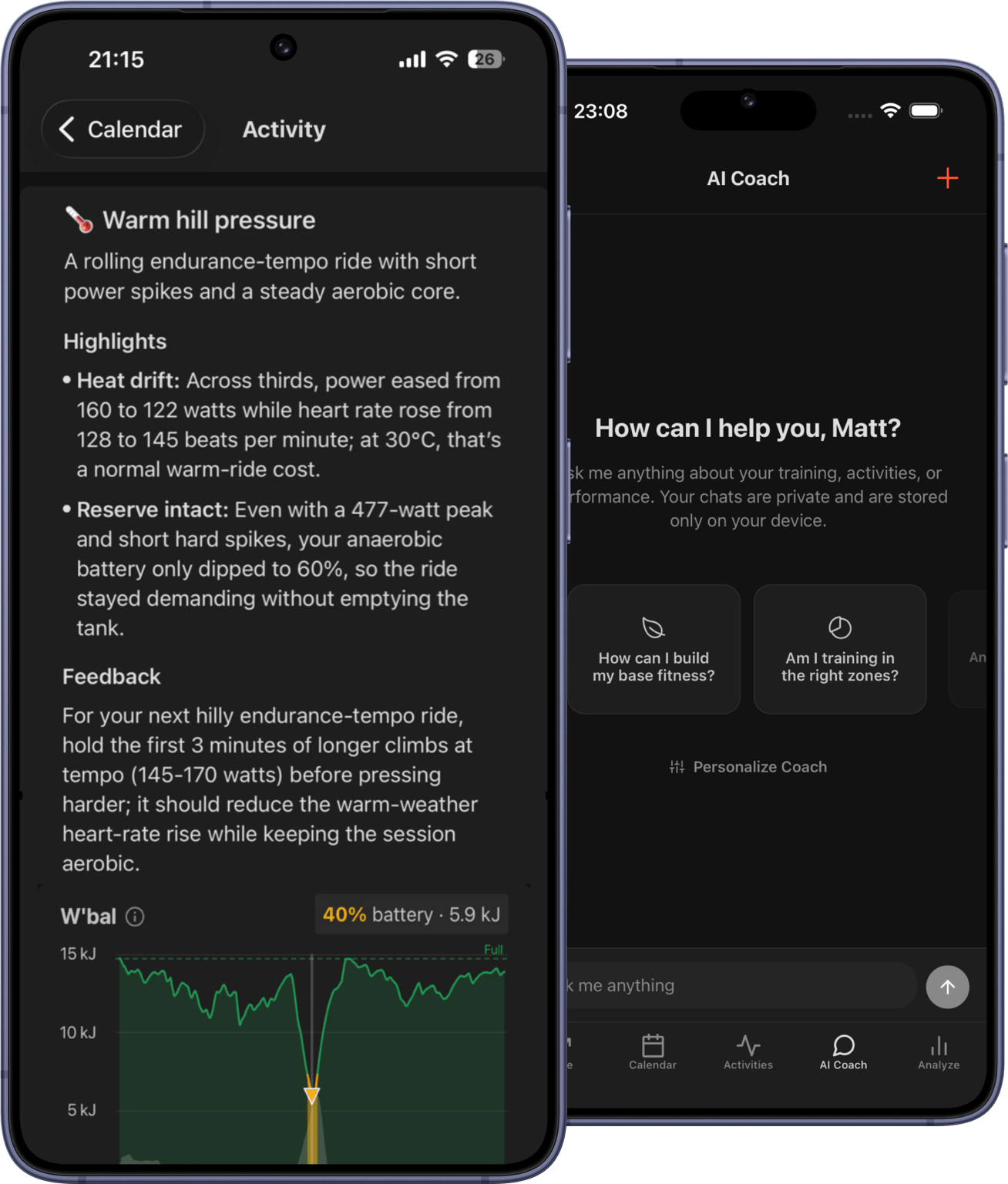
A coach who's seen every ride you've done
Ask FormBeat's AI Coach anything - what to ride today, why a session felt flat, how to pace your next race - and it answers from your real training: your power, your history, how you're recovering. Not generic tips, but a read of what each ride actually meant and what to do next.
The guidance you'd pay a coach for - for the price of an app.